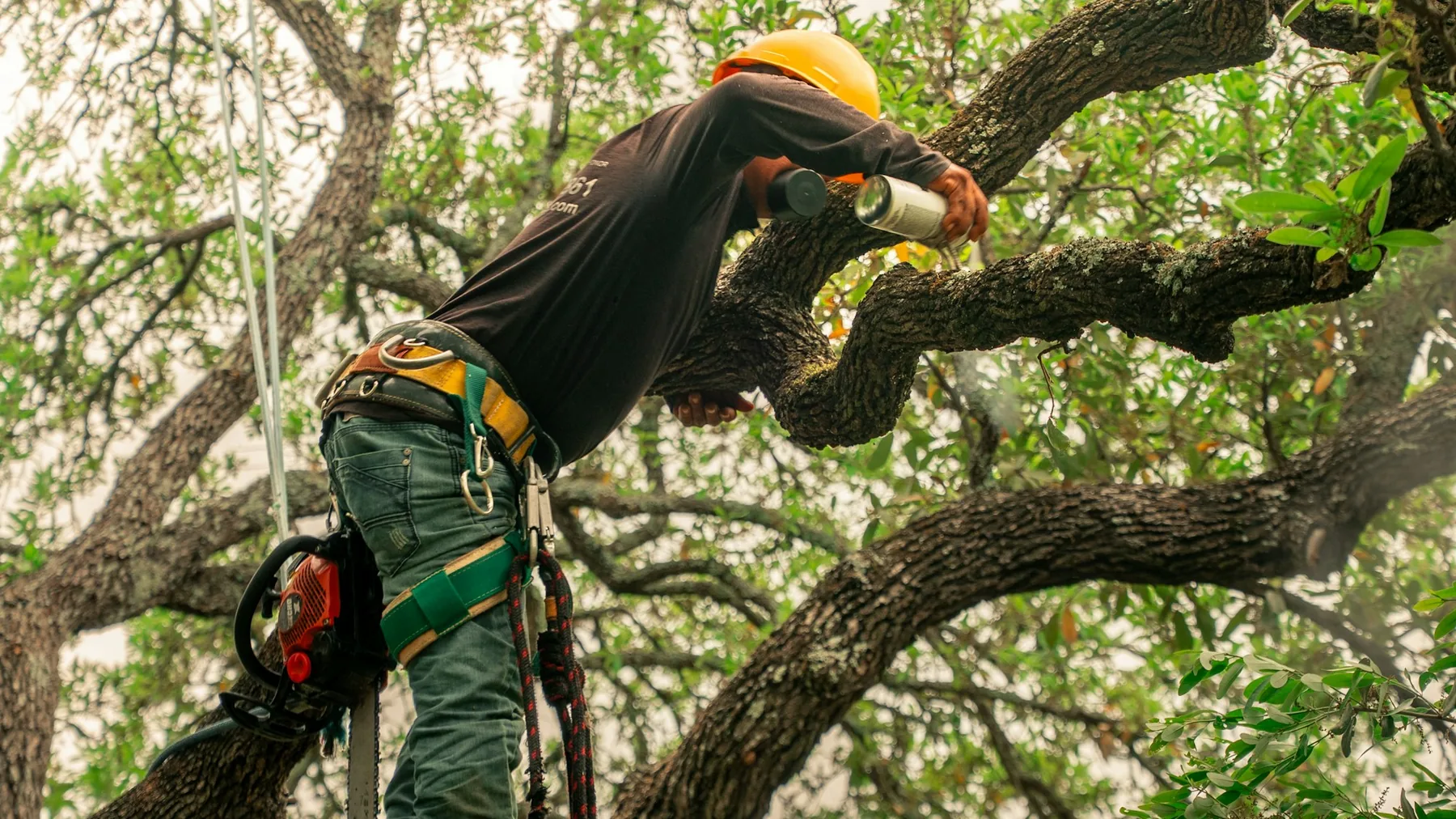
Why a useful estimate starts on site
There is no responsible flat price for tree removal. Two trees of similar height can require very different plans because of their condition, location, nearby structures, and the route available for people and equipment. Photos and, for complex work, an on-site assessment are generally needed before a dependable figure can be given.
Memphis Tree Service Pro accepts quote requests for tree removal throughout Memphis and surrounding communities. Tell us about the tree, property access, nearby structures, and desired cleanup.
The factors that commonly change the price
A written estimate should reflect the actual work plan, not just the tree's height. Ask which of the following conditions affect the scope.
- Tree size, trunk diameter, species, lean, and visible defects
- Distance from buildings, fences, streets, pools, and utility lines
- Backyard access, gates, slopes, soft ground, and room for equipment
- Whether the tree can be felled in sections or needs controlled rigging
- Storm damage, dead wood, decay, hanging limbs, or unstable root plates
- Debris hauling, wood stacking, stump grinding, and site cleanup
- Traffic control, permits, or utility coordination when applicable
How to compare written estimates
Compare the same scope line by line. Confirm whether the price includes cleanup, hauling, stump work, protection for nearby property, and restoration of ruts or disturbed areas. Ask who is responsible for permits and utility notifications. If timing matters, have the expected schedule written down.
Before authorizing work, review current credentials, insurance documentation, and local requirements that apply to the project.
Prepare details before requesting a quote
Useful photos include the entire tree, the base, any damaged areas, nearby structures, and the access route from the street. Note whether the tree is near a power line or has changed after a storm. Never approach a hanging limb or unstable tree to take a better photo.
For an urgent hazard, keep people away and contact the utility first if wires are involved. Otherwise, a clear description can help determine whether an on-site assessment is needed.
Understand how the work may be sequenced
A removal proposal should describe the broad sequence without turning the contract into a do-it-yourself instruction sheet. Site setup, an exclusion zone, controlled handling, debris processing, and final cleanup may happen in distinct phases. Ask what property must be moved beforehand and when normal access is expected to resume.
Complex sites may require coordination among a utility, traffic authority, crane or lift supplier, insurer, or neighboring owner. The estimate should identify major dependencies and explain what happens if a scheduled dependency is delayed.
Treat price changes as contract changes
An on-site evaluation reduces uncertainty, but hidden conditions can still appear. Ask for the assumptions and process for approving additional work in writing. A change should describe the new condition, revised scope, and price before non-emergency extra work proceeds. Preserve that approval with the contract records.
Avoid agreements that leave every material term open. A useful contract identifies the tree, included work, exclusions, schedule expectations, payment timing, cleanup, and responsibility for damage or restoration. Legal rights vary, so seek qualified advice when contract terms or ownership are disputed.
Use estimates to compare plans, not fear
Urgency should be tied to observed movement, active breakage, electrical contact, blocked critical access, or an evaluator's reasoned risk findings. Statements that a tree will certainly fall on a particular day are not dependable. If the situation is not immediate, allow enough time to understand alternatives and compare equivalent scopes.
A lower quote is not automatically unsafe and a higher quote is not automatically more complete. Read the written work plan, review the project documentation, and ask direct questions. The purpose of comparison is to understand what will happen on this site and what will remain when the work is finished.
Turn general guidance into a site-specific decision
An online article can help organize questions, but it cannot see the tree, soil, targets, utilities, access, or recent changes at a property. Use the guidance as preparation for an on-site conversation. Describe observations accurately, avoid declaring a diagnosis, and ask the evaluator to connect each recommendation to conditions that can be explained.
Request a written scope that identifies the tree or area, objective, included work, exclusions, cleanup, access protection, and responsibility for utilities or permits. If two proposals recommend different outcomes, resolve that difference before comparing price. A pruning proposal, a hazard-stabilization proposal, and a full-removal proposal are not interchangeable even when they concern the same tree.
Before authorizing work, review current qualifications, insurance documentation, contract terms, and local requirements that apply to the project.
Safety takes priority over estimate gathering. Stay away from active movement, hanging wood, and every tree or object touching a power line. Call emergency services for an immediate threat to life or critical access and contact the serving utility for electrical hazards. Website forms and ordinary quote requests are not emergency-dispatch channels.
- Observe and photograph only from a safe location
- Compare equivalent written scopes
- Review project documents before authorizing work
- Use emergency and utility channels when hazards are active
Sources and further reading
These references support the general safety and tree-care guidance above. They do not replace an on-site evaluation of a particular tree.
- Managing Hazards and Risk — International Society of Arboriculture
- Recognizing Tree Hazards — University of Tennessee Extension
- Safety After the Storm — National Weather Service