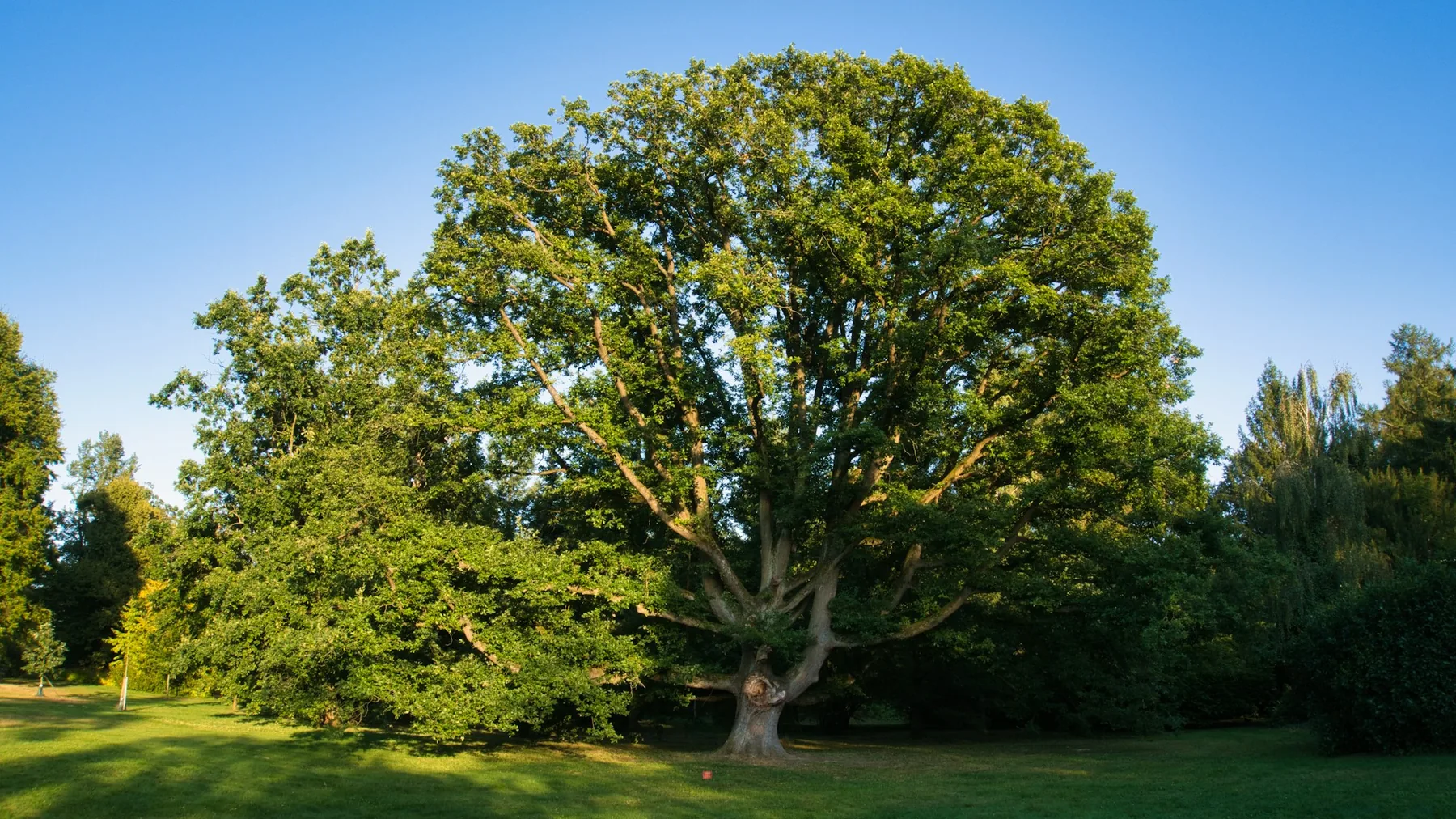
A large oak is not automatically a dangerous oak
Mature oaks can provide shade, habitat, and long-term value. Their size alone does not prove that they are unsafe, and many concerns can only be assessed in person. The goal of an evaluation is to identify defects, likely targets, and practical ways to reduce risk while considering whether the tree can remain.
If you are concerned about a mature oak, an on-site evaluation can identify defects, likely targets, and reasonable options without assuming removal is necessary.
Changes that deserve prompt attention
New conditions matter more than a dramatic-looking but long-standing feature. After a storm, compare the tree with how it looked before and keep people away if movement or breakage is ongoing.
- A fresh lean, lifted soil, cracking around the root plate, or exposed roots
- Large broken, hanging, or newly dead limbs over occupied areas
- A recent trunk crack, split union, open cavity, or falling bark with soft wood
- Fungal fruiting bodies near the trunk or root flare
- Rapid canopy thinning, unusual leaf loss, or dieback on major branches
- Construction, trenching, grade changes, or vehicle damage near the roots
What an evaluation should address
A useful assessment considers the whole tree and what could be struck if a part failed. Ask the evaluator to explain the observed defect, the likelihood and consequence of failure, and reasonable alternatives. Those alternatives may include monitoring, pruning, changing how the area is used, support systems in limited cases, or removal.
If removal is recommended, request a written scope that explains access, rigging, debris, stump work, protection of nearby property, and applicable project documentation.
What to do during an immediate hazard
Move people and pets away from the potential fall area. Do not stand beneath hanging branches or try to pull down broken limbs. If any part of the tree touches or threatens an electrical line, stay clear and call the utility or emergency services as appropriate.
For a non-immediate concern, photograph the tree from a safe distance and note when the change appeared. Those details help prioritize the request and prepare for an on-site visit.
Separate defects from targets
A tree feature becomes more consequential when a person or valuable property can be struck. A dead limb over an unused corner is not the same situation as one over a bedroom, sidewalk, or play area. Sometimes relocating a target or changing how an area is used can reduce exposure while other options are evaluated.
Ask the evaluator to describe the part that might fail, plausible direction or reach, frequency of occupancy, and uncertainty. This framework is more useful than describing the entire tree as “dangerous.” It also makes monitoring recommendations easier to understand.
Consider preservation options honestly
Selective pruning may address particular dead or defective branches. Support systems may be discussed for suitable trees, but they require design, inspection, and maintenance and do not guarantee against failure. Monitoring can be reasonable when changes are slow and targets can be managed.
Preservation is not always practical. Extensive root-plate movement, severe defects in a high-use area, or a tree whose condition prevents safe work may support removal. The key is a site-specific explanation rather than a rule that every giant oak must come down quickly.
Plan for the canopy change
Removing a mature oak changes shade, wind exposure, drainage, habitat, and the growing conditions of nearby plants. Adjacent trees that were sheltered may experience different loading and sunlight. Ask how remaining trees and landscaping will be protected during work and observed afterward.
If replacement planting is appropriate, select for the new site's soil, utilities, mature space, and diversity. A young tree will not immediately replace the removed canopy. Avoid promises that one replacement choice can reproduce decades of growth or eliminate every future maintenance need.
Turn general guidance into a site-specific decision
An online article can help organize questions, but it cannot see the tree, soil, targets, utilities, access, or recent changes at a property. Use the guidance as preparation for an on-site conversation. Describe observations accurately, avoid declaring a diagnosis, and ask the evaluator to connect each recommendation to conditions that can be explained.
Request a written scope that identifies the tree or area, objective, included work, exclusions, cleanup, access protection, and responsibility for utilities or permits. If two proposals recommend different outcomes, resolve that difference before comparing price. A pruning proposal, a hazard-stabilization proposal, and a full-removal proposal are not interchangeable even when they concern the same tree.
Before authorizing work, review current qualifications, insurance documentation, contract terms, and local requirements that apply to the project.
Safety takes priority over estimate gathering. Stay away from active movement, hanging wood, and every tree or object touching a power line. Call emergency services for an immediate threat to life or critical access and contact the serving utility for electrical hazards. Website forms and ordinary quote requests are not emergency-dispatch channels.
- Observe and photograph only from a safe location
- Compare equivalent written scopes
- Review project documents before authorizing work
- Use emergency and utility channels when hazards are active
Sources and further reading
These references support the general safety and tree-care guidance above. They do not replace an on-site evaluation of a particular tree.
- Managing Hazards and Risk — International Society of Arboriculture
- Recognizing Tree Hazards — University of Tennessee Extension
- Safety After the Storm — National Weather Service