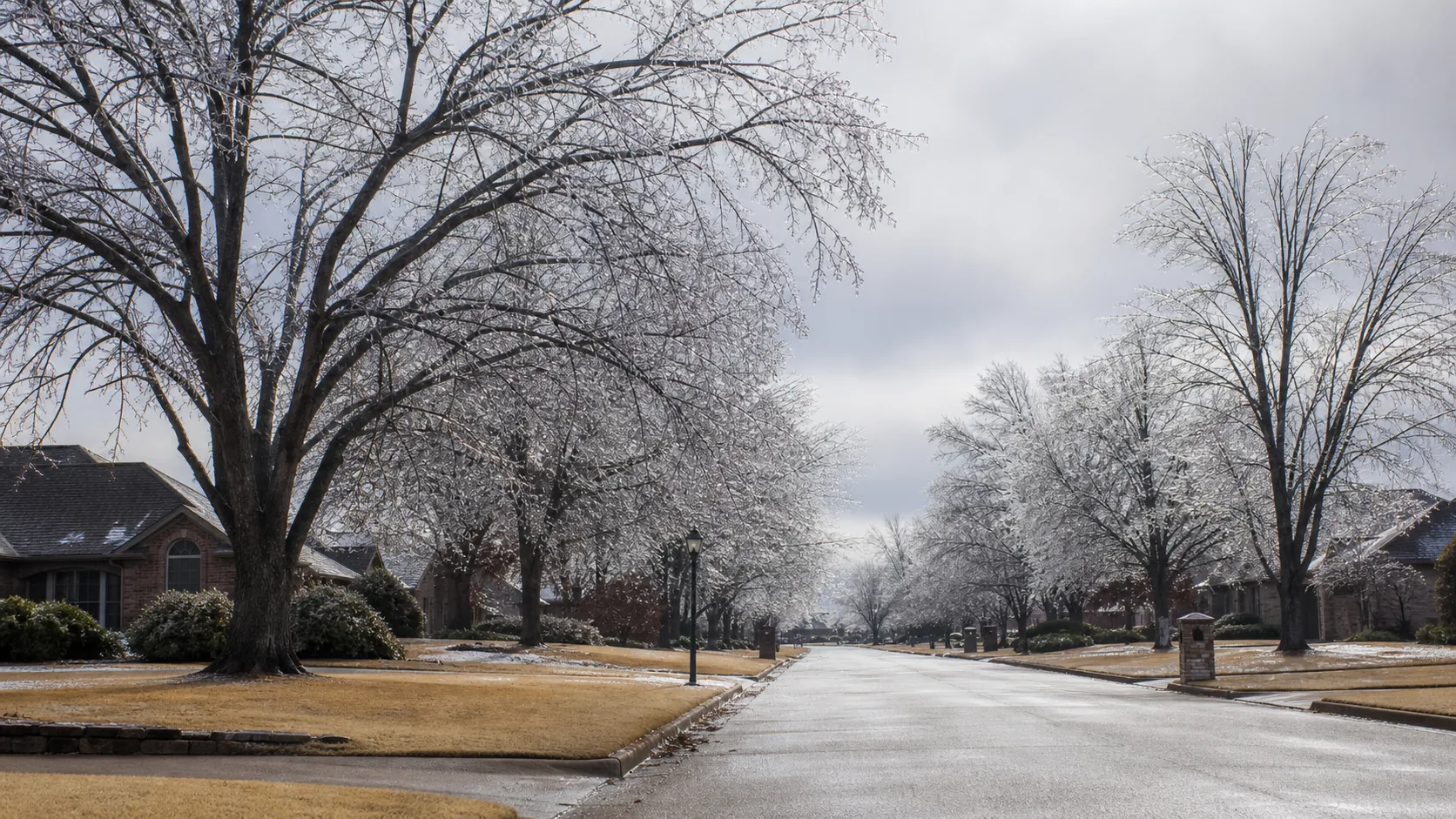
Winter is an observation season
After leaves fall, branch spacing, old cuts, broken limbs, cavities, and competing stems can be easier to see. Walk the property from safe, normal-use areas and photograph important trees. Compare those images after storms and again when leaves emerge.
Memphis Tree Service Pro accepts quote requests for winter inspections, pruning, storm damage, and related tree-service needs. Recommendations should follow an evaluation of the actual tree and site.
Give ice-loaded branches space
Ice and wet snow add weight to branches and can bring down trees and power lines. The National Weather Service advises staying away from downed lines and objects touching them. Keep people and vehicles out from beneath loaded or sagging branches.
Do not strike, shake, or pull an iced branch to release it. Sudden unloading can cause unpredictable movement and breakage. Wait for conditions to improve unless emergency responders or the utility direct otherwise.
Respond to storm damage in the right order
Create distance first, then identify utility contact, emergency access, and occupied targets. Call emergency services for an immediate life threat. Contact the electric utility when a tree or branch touches or threatens a line; never assume the line is inactive.
Photograph only from outside the possible fall area. If property is damaged, ask the insurer what documentation it needs before non-emergency cleanup. Coverage decisions belong to the insurer.
Water according to soil, not the calendar
Dormant trees can still experience dry soil, especially young or recently planted trees. Check actual soil moisture and local restrictions before watering. Saturated soil does not need more water, and poor drainage can create its own root problems.
Water slowly over the root area when conditions are dry and temperatures allow infiltration. Avoid creating ice on walkways. Species, soil, exposure, and establishment stage determine need; a fixed weekly schedule is not universally appropriate.
Mulch should not bury the trunk
A moderate organic mulch layer can conserve moisture and buffer soil conditions, but it should be kept away from direct contact with the trunk. A mound piled against bark can conceal the root flare and hold moisture where it is not wanted.
Before adding more mulch, check what is already present. Spread it broadly when space permits rather than building a narrow volcano. Do not cover utilities, drainage features, or the base of neighboring plants indiscriminately.
Protect young trees thoughtfully
Young trunks may be vulnerable to animal damage or mechanical injury. Guards should allow inspection, avoid trapping moisture, and be adjusted as the trunk grows. Stakes are not automatically needed and should not remain indefinitely without review.
Avoid salt piles and snow storage around root zones. Deicing products and compacted snow can affect soil and bark. Use site-appropriate snow management and observe spring growth for changes.
Dormant pruning needs a scope
Late winter can be practical for many deciduous trees because structure is visible, but timing depends on species, flowering, disease concerns, and objectives. Emergency broken-branch work does not wait for the ideal calendar window.
Ask which branches will be removed and why. Avoid topping or indiscriminate shortening; University of Tennessee Extension describes how topping creates large wounds and weak regrowth. A balanced, objective-based plan is more useful than a generic seasonal package.
Prepare for spring and severe weather
Update contact information for utilities and emergency services, clear normal access routes, and document large trees before storms. Arrange non-urgent evaluations early rather than waiting for a forecast to create a rush. No pruning program can make a tree storm-proof.
When seeking quotes, share safe photos, access limits, recent changes, and the desired outcome. Review current qualifications, insurance documentation, the written scope, and utility or permit responsibilities.
- Inspect from safe ground after leaf drop
- Stay away from iced branches and every downed line
- Check soil before watering
- Keep mulch off the trunk
- Define pruning objectives in writing
Avoid well-intended winter damage
Do not use axes or sharp tools to knock ice from bark, pile deicing salt around trunks, wrap a mature tree in non-breathable material, or add fertilizer simply because growth is dormant. Interventions should respond to an observed need and account for species and site.
When winter reveals a concern that is not urgent, mark it in photographs and schedule an evaluation under safe conditions. Waiting for suitable access is different from ignoring active breakage or electrical contact.
Turn general guidance into a site-specific decision
An online article can help organize questions, but it cannot see the tree, soil, targets, utilities, access, or recent changes at a property. Use the guidance as preparation for an on-site conversation. Describe observations accurately, avoid declaring a diagnosis, and ask the evaluator to connect each recommendation to conditions that can be explained.
Request a written scope that identifies the tree or area, objective, included work, exclusions, cleanup, access protection, and responsibility for utilities or permits. If two proposals recommend different outcomes, resolve that difference before comparing price. A pruning proposal, a hazard-stabilization proposal, and a full-removal proposal are not interchangeable even when they concern the same tree.
Before authorizing work, review current qualifications, insurance documentation, contract terms, and local requirements that apply to the project.
Safety takes priority over estimate gathering. Stay away from active movement, hanging wood, and every tree or object touching a power line. Call emergency services for an immediate threat to life or critical access and contact the serving utility for electrical hazards. Website forms and ordinary quote requests are not emergency-dispatch channels.
- Observe and photograph only from a safe location
- Compare equivalent written scopes
- Review project documents before authorizing work
- Use emergency and utility channels when hazards are active
Sources and further reading
These references support the general safety and tree-care guidance above. They do not replace an on-site evaluation of a particular tree.
- Winter Weather Safety — National Weather Service
- Topping Trees: The Cost of Poor Pruning — University of Tennessee Extension
- Managing Hazards and Risk — International Society of Arboriculture