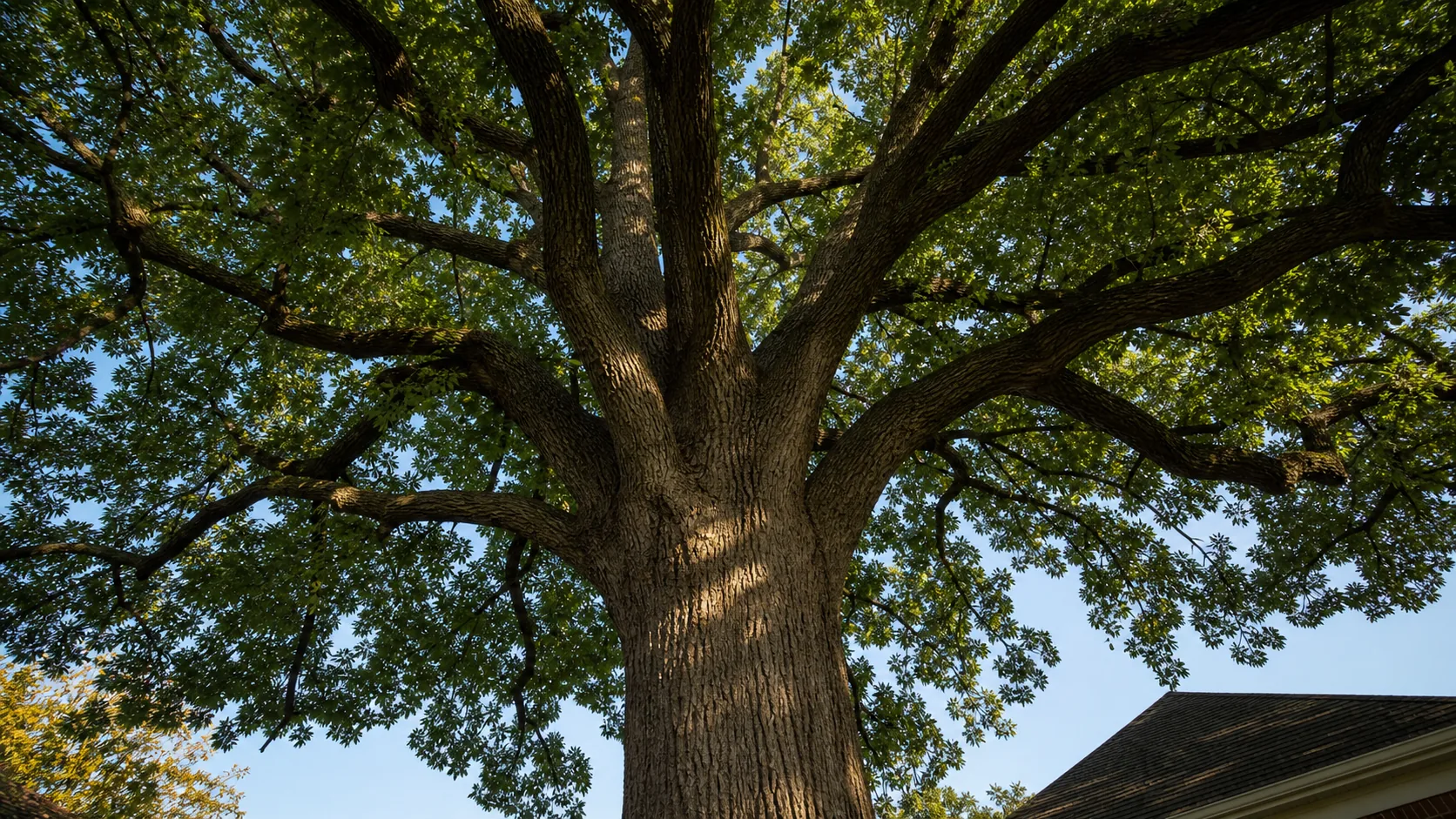
Large does not automatically mean hazardous
Mature oaks can provide shade, habitat, and character. Height and crown spread alone do not prove that a tree should be removed. A reasonable evaluation considers condition, targets, site use, recent changes, and whether pruning, monitoring, support, or target management could address the concern.
If you are concerned about a large oak, an on-site evaluation can identify defects, targets, access limits, and reasonable alternatives before removal is considered.
Ask for the observed basis
A recommendation should identify observations such as a new lean, root-plate movement, major cracks, extensive deadwood, decay indicators, repeated failures, or construction damage. It should also explain what people or property could be struck and the limits of the visual assessment.
Fear-based statements and exact failure predictions are not substitutes for evidence. Tree risk is not zero even after care, and no one can guarantee how a living tree will respond to every future storm.
Access shapes the removal method
Large sections may need to be lowered when a tree stands near a roof, fence, pool, neighboring yard, or narrow driveway. Gate width, soil conditions, slopes, overhead clearance, and the route to the street influence equipment and labor.
Photograph the entire access route. Ask how lawns, hardscape, and structures will be protected and whether temporary protection is included. Clarify who moves vehicles or landscape features before work begins.
Utilities and public space need coordination
Branches near electrical lines require utility involvement and specialized boundaries. Report every visible wire. If contact exists, stay away and call the utility; do not rely on a website form or attempt to move material yourself.
Trees near streets, sidewalks, or public right-of-way may require approvals, parking arrangements, or traffic control. Ask which party confirms the requirements and include that responsibility in the written scope.
Condition affects climbing and rigging
Dead or decayed wood may not support the same loads as sound wood. The work plan must account for the actual tree and may require different access or lifting methods. A photo-based quote that assumes every branch is reliable may change after an on-site assessment.
Ask what key assumptions the estimate makes and how scope changes are approved. The answer should describe a process, not reveal hazardous step-by-step instructions for do-it-yourself removal.
Debris can be a substantial part of the job
A large oak produces logs, branches, and chips that must be moved, stacked, processed, or hauled. State whether you want firewood-sized pieces, all material removed, or chips left. Confirm whether disposal and cleanup are included.
Wood can be heavy enough to affect turf and paving during transport. Ask about movement routes and ground protection. Final restoration, ruts, topsoil, and reseeding may be separate from tree work.
The stump is a separate decision
Cutting the tree does not remove the stump or deep roots. Grinding depth, surface roots, chip handling, backfill, and final grade should be itemized. The intended future use—lawn, bed, pavement, or replanting—helps define a useful finish.
Utility and private-line locating applies before soil disturbance. Do not assume a large root area is clear because the trunk predates nearby improvements.
Compare complete written scopes
Do not compare a removal-only number with a quote that includes hauling, stump grinding, access protection, traffic control, and restoration. Confirm schedule assumptions, changes, payment terms, and responsibility for permits and utilities.
Review current qualifications, insurance documentation, and the contract. For immediate movement or utility contact, follow emergency guidance; for planned work, use safe photos and an on-site assessment to build a dependable scope.
- Reason for removal and alternatives discussed
- Access, rigging, and property protection defined
- Utility, street, and permit coordination assigned
- Debris, stump, chips, and final grade itemized
- Project documents reviewed before work
Plan for neighbors and boundaries
A broad crown may extend across property lines even when the trunk does not. Confirm access, ownership, and responsibility before allowing workers or material to enter neighboring property. Written permission can prevent an estimate from relying on access that is unavailable on the work day.
Discuss noise, street use, and temporary access restrictions with affected neighbors without promising an exact schedule. The contract should identify who communicates changes and who restores any authorized access area.
Turn general guidance into a site-specific decision
An online article can help organize questions, but it cannot see the tree, soil, targets, utilities, access, or recent changes at a property. Use the guidance as preparation for an on-site conversation. Describe observations accurately, avoid declaring a diagnosis, and ask the evaluator to connect each recommendation to conditions that can be explained.
Request a written scope that identifies the tree or area, objective, included work, exclusions, cleanup, access protection, and responsibility for utilities or permits. If two proposals recommend different outcomes, resolve that difference before comparing price. A pruning proposal, a hazard-stabilization proposal, and a full-removal proposal are not interchangeable even when they concern the same tree.
Before authorizing work, review current qualifications, insurance documentation, contract terms, and local requirements that apply to the project.
Safety takes priority over estimate gathering. Stay away from active movement, hanging wood, and every tree or object touching a power line. Call emergency services for an immediate threat to life or critical access and contact the serving utility for electrical hazards. Website forms and ordinary quote requests are not emergency-dispatch channels.
- Observe and photograph only from a safe location
- Compare equivalent written scopes
- Review project documents before authorizing work
- Use emergency and utility channels when hazards are active
Sources and further reading
These references support the general safety and tree-care guidance above. They do not replace an on-site evaluation of a particular tree.
- Managing Hazards and Risk — International Society of Arboriculture
- Recognizing Tree Hazards — University of Tennessee Extension
- Topping Trees: The Cost of Poor Pruning — University of Tennessee Extension